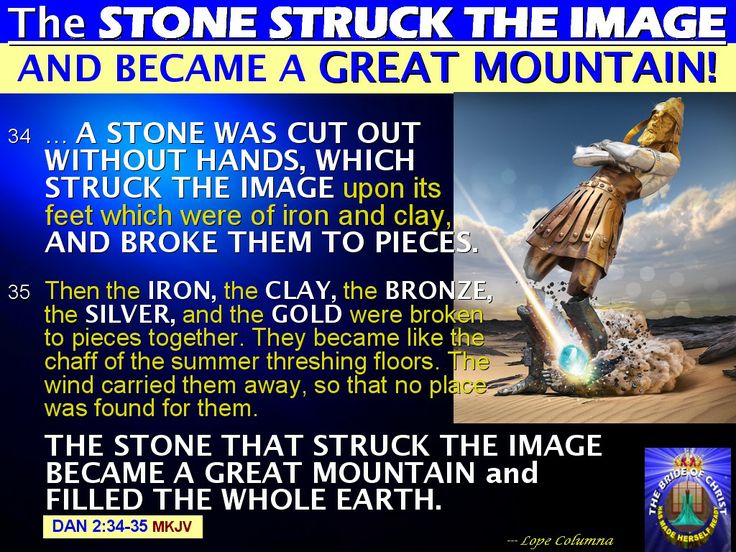
As we continue to ponder the signs of our times and how we are to respond to "the stone cut without human hands" that shatteringly strikes the proud edifice of the kingdoms of man, growing into a mountain that fills the world, I would like for us to look at Jesus as Cornerstone and at the Heb 6:1 - 2 foundational principles.
Accordingly, let me now clip from the NCSTS Unit 10, on discipleship:
_____________
>>In Heb 5:12 - 6:3, the words of the beginnings of Christ -- i.e. the ABC teachings of Christ -- are identified, and set in a context of correcting spiritual retardation.
The call is that the original recipients
of the letter should move on to long delayed Christian maturity by
ensuring the soundness of one's foundations and building thereupon:
Heb 5:12 . . . though you should in fact
be teachers by this time, you need someone to teach you the beginning
elements of God’s utterances. You have gone back to needing milk, not
solid food. 13 For everyone who lives on milk is inexperienced in the
message of righteousness, because he is an infant. 14 But solid food is
for the mature, whose perceptions are trained by practice to discern
both good and evil.
6: 1 Therefore we must progress beyond the elementary [= "basic" or "ABC"] instructions about Christ and move on to maturity, not laying this foundation again:
[I] repentance from dead works and
[II] faith in God,
[III] 2 teaching about baptisms,
[IV] laying on of hands,
[V] resurrection of the dead, and
[VI] eternal judgment.
3 And this is what we intend to do . . .
[NET. Also, let us observe carefully: these six principles are "the elementary [= "basic" or "ABC"] instructions about Christ."
So, those who would assign this list of first principles to the
Levitical system need to think about that emphasis. A far more
reasonable view is that these are first steps instructions about Christ,
"ABC's" and "123's" that lay out what it takes to so properly respond
to the gospel that one's life of discipleship can have a sound basis.)]
Pulling back a moment, to see the
Kingdom of God scale, prophetic panorama courtesy Daniel's
interpretation of Nebuchadnezzar's dream in Daniel ch 2:
We can then focus on foundations in that context:
The writer to the Hebrews makes it plain
that the mature are well-founded on these six elementary/ABC
principles, and so are stable and discerning, having developed the
confident ability to discern good from evil (which includes discerning
truth from misleading falsity) by reason of practice.
This is not at all a call to empty
theorising and speculative argument, but to transformation of life and
character through evil acknowledged and turned from, through trust in
God through the Christ and through gospel truth learned and lived . . . . the "six principles" foundation of such well-founded discipleship includes:
(Michelson: "1. (subjectively) compunction (for guilt, including reformation) 2. (by implication) reversal (of [another's] decision)," Thayer: "1. a change of mind, as it appears to one who repents, of a purpose he has formed or of something he has done"),
. . . and
II: faith: trusting God based on his Word. [ Rom. 1:1 - 4, 16 - 17; 4:4 - 8 and 10:17; Heb. 11:6. Such faith -- πίστις (Pistis, pron: pis'-tis)
-- can be seen as the new attitude adopted by the penitent sinner, that
of trusting God who forgives the wicked who turn to him that takes God
at his word even in the teeth of impressions and inclinations
otherwise.]
(Thayer: "1. conviction of the truth
of anything, belief; in the NT of a conviction or belief respecting
man's relationship to God and divine things, generally with the included
idea of trust and holy fervour born of faith and joined with it a.
relating to God, the conviction that God exists and is the creator and
ruler of all things, the provider and bestower of eternal salvation
through Christ b. relating to Christ, a strong and welcome
conviction or belief that Jesus is the Messiah, through whom we obtain
eternal salvation in the kingdom of God c. the religious beliefs of
Christians d. belief with the predominate idea of trust (or
confidence) whether in God or in Christ, springing from faith in the
same 2. fidelity, faithfulness a. the character of one who can be
relied on.")
V: Living life from an eternal point of view: Jesus rose, validating the gospel and giving us an eternal hope of resurrection; but this also means that God "has set a day when he will judge the world with justice by the man he has appointed," Christ.
These, as the writer to the Hebrews stresses, we must lay in our lives and build upon . . .
This can be succinctly and powerfully
focussed through reflecting on Eph 2:8 - 10, noting especially the verse
we usually do not cite, 10:
Eph 2: 8 For by grace you are saved
through faith, and this is not from yourselves, it is the gift of God; 9
it is not from works, so that no one can boast. 10 For we are his workmanship, having been created in Christ Jesus for good works that God prepared beforehand so we may do them.[NET]
It is also instructive to see the tension in Heb 5:12 on, as the writer
is torn between wanting to move on to more advanced subjects and the
slow learner behaviour he challenges. In 5:12 - 14, he therefore
comments:
Heb 5: 12 For
though you should in fact be teachers by this time, you need someone to
teach you the beginning elements of God’s utterances. You have gone
back to needing milk, not solid food. 13 For everyone who lives on milk is inexperienced in the message of righteousness, because he is an infant. 14 But solid food is for the mature, whose perceptions are trained by practice to discern both good and evil. [NET]
This is perhaps a little close to home for many of us, who need to
consolidate our foundation and properly build on it. So, let us observe
how the writer addresses these slow learners who he warns of the dangers
of apostasy, even while saying he has confidence the case is not that
bad.
First, the warning:
Heb 6: 4 For
it is impossible in the case of those who have once been enlightened,
tasted the heavenly gift, become partakers of the Holy Spirit, 5 tasted the good word of God and the miracles of the coming age, 6 and
then have committed apostasy, to renew them again to repentance, since
they are crucifying the Son of God for themselves all over again and
holding him up to contempt.
It is clear that he has here focussed the first three teachings,
repentance, faith in God through the crucified and risen Christ the Son
of God (which cometh by hearing the word of God as a heavenly gift from
God) and the spiritual aspect of conversion, being born from above by
the Spirit. The gospel context of these foundational principles is
readily apparent; these are indeed about the words of the beginnings of
Christian discipleship.
Of course, in so speaking, a major and too often divisive doctrinal
controversy surfaces, can one be saved but so apostasise as to be lost,
irretrievably lost as this text seemingly suggests?
That is a worthwhile question for pondering, but it is equally
noteworthy that the NT does not go into grand expositions on the nuances
and possibilities. Instead, we find an emphasis on making one's calling
and election sure, as Peter counsels:
2 Peter 1: 2 May grace and peace be lavished on you as you grow in the rich knowledge of God and of Jesus our Lord!
3 I
can pray this because his divine power has bestowed on us everything
necessary for life and godliness through the rich knowledge of the one
who called us by his own glory and excellence. 4 Through
these things he has bestowed on us his precious and most magnificent
promises, so that by means of what was promised you may become partakers
of the divine nature, after escaping the worldly corruption that is
produced by evil desire.
5 For this very reason, make every effort to add to your faith excellence, to excellence, knowledge; 6 to knowledge, self-control; to self-control, perseverance; to perseverance, godliness; 7 to godliness, brotherly affection; to brotherly affection, unselfish love.
8 For
if these things are really yours and are continually increasing, they
will keep you from becoming ineffective and unproductive in your pursuit
of knowing our Lord Jesus Christ more intimately.
9 But
concerning the one who lacks such things—he is blind. That is to say,
he is nearsighted, since he has forgotten about the cleansing of his
past sins.
10 Therefore,
brothers and sisters, make every effort to be sure of your calling and
election. For by doing this you will never stumble into sin.
11 For thus an entrance into the eternal kingdom of our Lord and Savior, Jesus Christ, will be richly provided for you. [NET]
So, while we refrain from a definitive conclusion on a subject where
learned and saintly teachers of the scriptures have differed over the
centuries, we emphasise the balance of discipleship: growth in
grace-filled godliness is the hallmark of one who has justified
confidence in his status of discipleship. Living faith, by the power of
the Spirit, flows over in transformation. And, soberingly, faith without
works is dead. But also while we are saved by grace through the gift of
faith, we are saved to walk in those good works laid out in advance for
us to do.
So, let us be about the true business and focus of discipleship.
Such themes are strongly echoed as the writer continues in Heb 6,
connecting issues of a life of fruitful service (which itself hints of
the sign of laid on hands: my hands under God's initiative, in his power . . .), to themes of the resurrection and eternal judgement:
Heb 6: 7 For
the ground that has soaked up the rain that frequently falls on it and
yields useful vegetation for those who tend it receives a blessing from
God.
8 But if it produces thorns and thistles, it is useless and about to be cursed; its fate is to be burned.
9 But in your case, dear friends, even though we speak like this, we are convinced of better things relating to salvation. 10 For
God is not unjust so as to forget your work and the love you have
demonstrated for his name, in having served and continuing to serve the
saints.
11 But we passionately want each of you to demonstrate the same eagerness for the fulfillment of your hope until the end, 12 so that you may not be sluggish, but imitators of those who through faith and perseverance inherit the promises.
This imagery directly echoes Jesus' parable of the Sower, Seed and Soils:
Luke 8:4 While a large crowd was gathering and people were coming to Jesus from one town after another, he spoke to them in a parable:
5 “A
sower went out to sow his seed. And as he sowed, some fell along the
path and was trampled on, and the wild birds devoured it. 6 Other seed fell on rock, and when it came up, it withered because it had no moisture. 7 Other seed fell among the thorns, and they grew up with it and choked it. 8 But
other seed fell on good soil and grew, and it produced a hundred times
as much grain.” As he said this, he called out, “The one who has ears to
hear had better listen!”
9 Then his disciples asked him what this parable meant.
10 He
said, “You have been given the opportunity to know the secrets of the
kingdom of God, but for others they are in parables, so that although they see they may not see, and although they hear they may not understand.
11 “Now the parable means this: The seed is the word of God. 12 Those
along the path are the ones who have heard; then the devil comes and
takes away the word from their hearts, so that they may not believe and
be saved. 13 Those
on the rock are the ones who receive the word with joy when they hear
it, but they have no root. They believe for a while, but in a time of
testing fall away. 14 As
for the seed that fell among thorns, these are the ones who hear, but
as they go on their way they are choked by the worries and riches and
pleasures of life, and their fruit does not mature. 15 But
as for the seed that landed on good soil, these are the ones who, after
hearing the word, cling to it with an honest and good heart, and bear
fruit with steadfast endurance. [NET]
Again and again we see how important it is to have hearts soft to God's
voice and word, which is how the gospel-seed of eternal life with its
innate power of fruitfulness can find open deep, singly-focussed soil
that then will "naturally" respond to the power of life in that word by
the Spirit of Christ, come to spiritual birth, grow and be fruitful.
And of course, we are aware of our stewardship and duty to venture in
the ways of God that we may gain more and more treasure for the Kingdom.
It is the cowardly, hoarding servant who hides the deposit he has been
given who is rebuked.
Where also, the passage hints at our responsibility to watch and address
the condition of our heart and our responses to the word of God.
Indeed, earlier in Hebrews, we read:
Heb 1:1 After God spoke long ago in various portions and in various ways to our ancestors through the prophets, 2 in these last days he has spoken to us in a son, whom he appointed heir of all things, and through whom he created the world. 3 The
Son is the radiance of his glory and the representation of his essence,
and he sustains all things by his powerful word, and so when he had
accomplished cleansing for sins, he sat down at the right hand of the Majesty on high. 4 Thus he became so far better than the angels as he has inherited a name superior to theirs . . . .
2:1 . . . we must pay closer attention to what we have heard, so that we do not drift away. 2 For if the message spoken through angels proved to be so firm that every violation or disobedience received its just penalty, 3 how
will we escape if we neglect such a great salvation? It was first
communicated through the Lord and was confirmed to us by those who heard
him, 4 while
God confirmed their witness with signs and wonders and various miracles
and gifts of the Holy Spirit distributed according to his will. [NET]
Heb 3:15, part of a pointed exposition of Psalm 95, cites the Psalm's warning . . . here, in the classic KJV: "To day if ye will hear his voice, harden not your hearts . . . "
The warning is patent.
The culminating words as he returns to the discussion on the priestly
order of Melchizedek, point both backwards to the Hebraic roots of the
Christian faith and forward to our eternal hope in Christ:
Heb 6: 17 In
the same way God wanted to demonstrate more clearly to the heirs of the
promise that his purpose was unchangeable, and so he intervened with an
oath, 18 so
that we who have found refuge in him may find strong encouragement to
hold fast to the hope set before us through two unchangeable things,
since it is impossible for God to lie.
19 We have this hope as an anchor for the soul, sure and steadfast, which reaches inside behind the curtain, 20 where Jesus our forerunner entered on our behalf, since he became a priest forever in the order of Melchizedek. [NET]
And so, we can see how to fruitfully build on the foundations we have in
Christ as we move forward under our great commission, through our
eternally certain hope, our sure and steadfast anchor.>>
_____________
Food for further thought as we ponder how we should live and act as Disciples in such a time as this. END